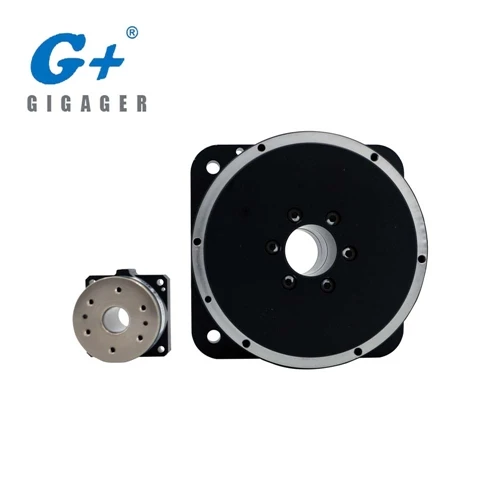
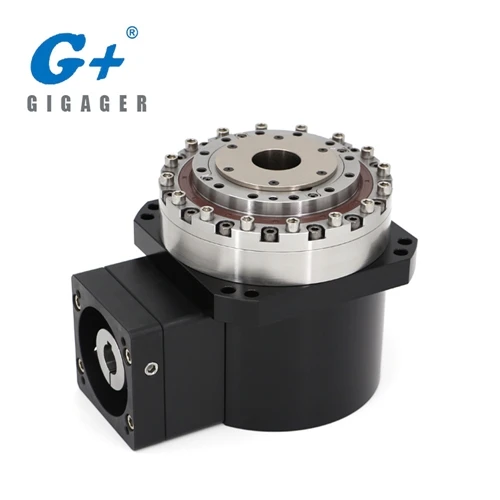
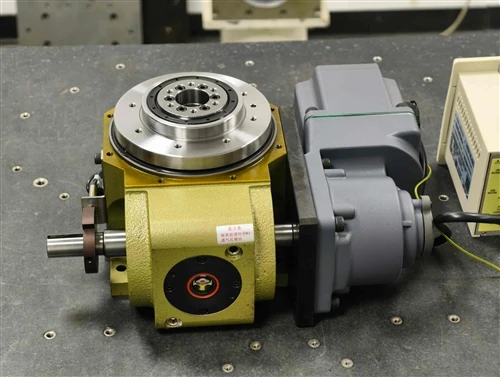
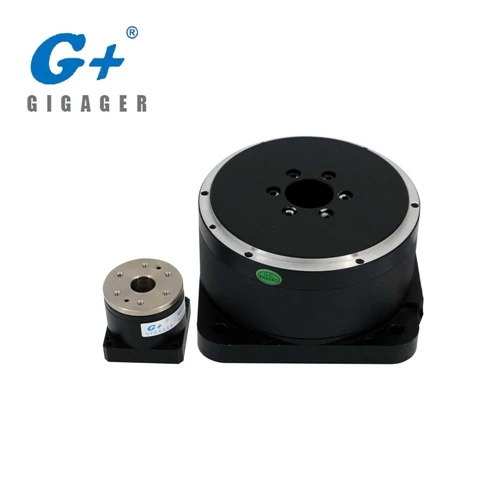
As direct drive technology becomes increasingly popular in industrial automation, more machine builders are adopting DD motors to achieve higher precision, faster response, and lower maintenance requirements.
However, selecting the right DD motor involves much more than simply choosing a torque value. Load conditions, motion profiles, accuracy requirements, and installation constraints all play important roles in determining the optimal motor configuration.
This guide introduces the key factors engineers should consider when selecting a direct drive motor.
Ⅰ. Why Proper DD Motor Selection Matters
A properly selected DD motor ensures stable operation, high positioning accuracy, and long-term reliability.
An undersized motor may struggle to meet acceleration requirements or overheat during operation, while an oversized motor can increase system cost and reduce efficiency.
Therefore, understanding the application requirements is the first step toward successful motor selection.
Ⅱ. Start with the Load
The load is the foundation of every DD motor selection project.
Engineers should first determine:
- Load type
- Load Weight
- Load dimensions
- Total load weight
- Load eccentric distance
- Radial load force
- Axial load force
These parameters directly affect the required torque requirements and motor selection calculations.
For large-diameter or eccentric loads, higher motor torque may be required even when the load weight itself is relatively small.
Ⅲ. Evaluate Speed and Motion Requirements
After understanding the load, the next step is defining the motion profile.
Key information includes:
- Maximum working speed
- Rated operating speed
- Acceleration time
- Deceleration time
- Start-stop frequency
- Duty cycle
Applications with frequent acceleration and deceleration typically require higher peak torque than applications operating at constant speed.
Fast cycle automation equipment often places greater demands on motor dynamic performance.
Ⅳ. Understand Torque Requirements
DD motor torque requirements generally consist of two parts:
Continuous Torque (The torque required during normal operation)
Peak Torque (The torque required during acceleration, deceleration, or sudden load changes)
A suitable motor should satisfy both requirements simultaneously. Torque requirements are usually determined based on load conditions and motion parameters.
Continuous torque ensures stable operation, while peak torque ensures the machine can achieve the desired dynamic performance.
Ⅴ. Consider Positioning Accuracy
Many DD motor applications require high-precision motion control.

Selection should therefore consider:
- Positioning accuracy
- Repeatability
- Radial runout
- Axial runout
Higher precision requirements often require higher-resolution encoders and more advanced control systems.
Semiconductor equipment, precision inspection systems, and high-end machine tools typically demand extremely high positioning accuracy.
Ⅵ. Verify Installation and Environmental Conditions
Motor performance is only one part of the selection process.
Mechanical integration requirements are equally important.
Engineers should verify:
- Installation method
- Hollow shaft diameter requirement
- Motor outer diameter limitation
- Motor height limitation
- Ambient temperature
- Protection rating
Power supply voltage

Ⅶ. Information Required for DD Motor Selection
To recommend the most suitable DD motor, the following information is typically required:
- Load type, weight and dimensions
- Total load weight
- Load eccentric distance
- Axial and radial load force
- Maximum and rated operating speed
- Acceleration and deceleration time
- Start-stop frequency and duty cycle
- Positioning accuracy requirements
- Installation dimensions
- Hollow shaft requirements
- Environmental conditions
- Power supply voltage
Providing complete application data helps engineers perform accurate calculations and recommend the most suitable motor configuration.
Ⅷ. Conclusion
Selecting the right DD motor requires a comprehensive evaluation of load characteristics, motion requirements, positioning accuracy, and installation conditions.
By understanding these factors at the beginning of a project, engineers can significantly improve machine performance, reliability, and long-term operating efficiency.