With the rapid development of automation and robotics, higher demands are placed on positioning accuracy, transmission stability, and compact mechanical design. Harmonic drives, based on elastic deformation transmission, have become a key solution in precision motion control systems.
ⅠStructure and Working Principle
A harmonic drive consists of three core components:
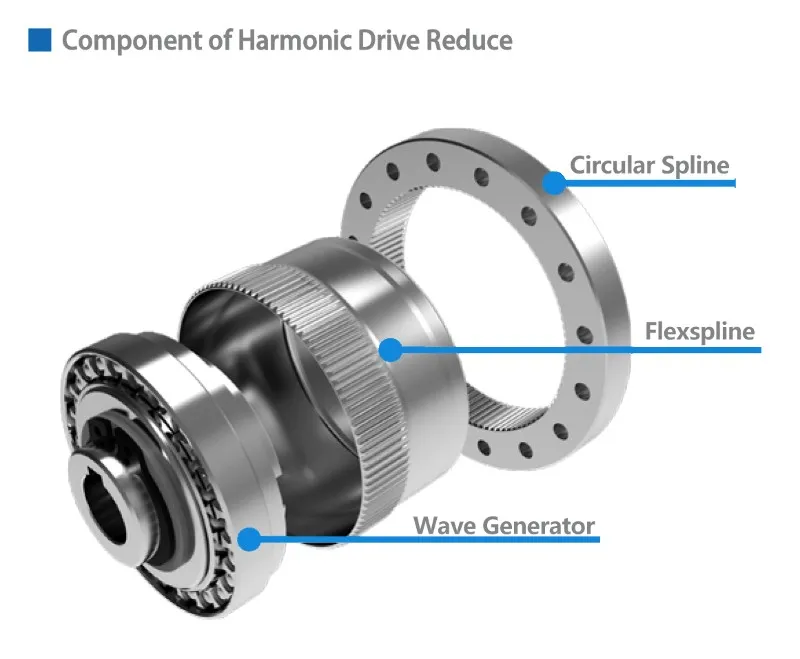
Wave Generator:It typically consists of an elliptical cam and a flexible bearing, and is an input component.
Flexspline:Thin-walled elastic gears can generate controllable elastic deformation under the action of a wave generator.
Circular Spline :Rigid internal gear rings typically have slightly more teeth than flexspline.
When the wave generator rotates, the flexspline deforms elliptically and meshes with the circular spline along its major axis. Due to the small tooth difference design, each rotation results in a slight angular displacement, enabling a high reduction ratio in a single stage.
Ⅱ Classification
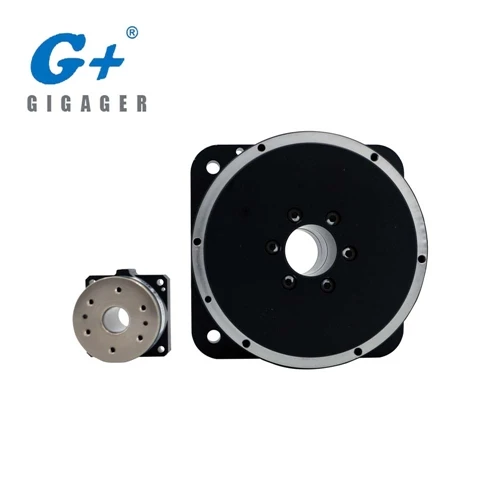
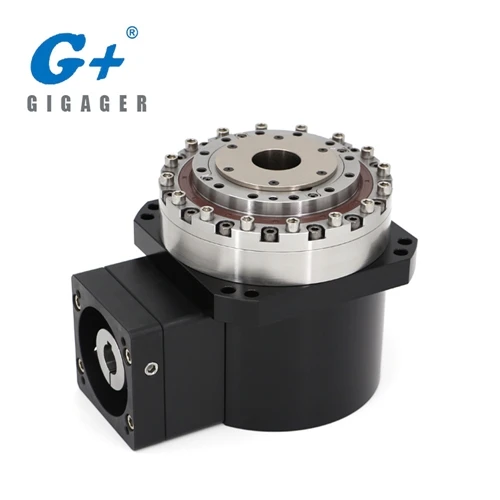
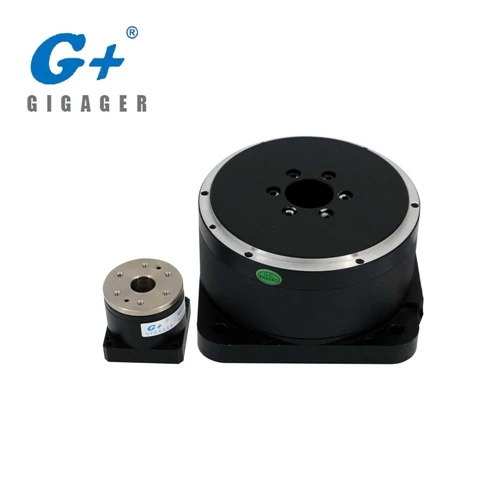
In engineering practice, harmonic drives are commonly classified according to their structural form and integration level. The most common categories include component type, integrated unit type, and hollow shaft type.
Component Type:Consists only of the core transmission components (wave generator, flexspline and circular spline), suitable for OEM customized structural integration.
Integrated Unit Type:Housing, bearing and output flange integrated for easier installation and improved rigidity.
Hollow Shaft Type:With center through-hole for cable routing or shaft penetration, commonly used in robot joints.
Although structures differ, the fundamental harmonic transmission principle remains the same.
Ⅲ Key Advantages
Near-Zero Backlash & High Precision
Elastic engagement ensures near-zero backlash and arc-second-level precision, with excellent repeatability.
High Reduction Ratio & Torque Density
Enables high reduction ratios in a single stage while delivering high torque, saving space and fitting compact systems.
Compact and Lightweight
Small form factor and low weight allow easy integration into compact robotic joints and automation systems.
Smooth Motion & Reliability
Multi-tooth engagement minimizes vibration and noise, while elastic engagement reduces shock loads, prolonging service life.
Ⅳ Typical Applications
Harmonic drives are widely used in:
- Industrial and collaborative robots
- Semiconductor equipment
- Medical devices
- Precision vision systems
- High-precision automation systems
In these applications, harmonic drives act as key transmission components influencing positioning accuracy, motion repeatability, and overall system performance.
Ⅴ Engineering Selection Guidelines
When selecting a harmonic drive, the following factors should be evaluated:
- Rated output torque and safety factor
- Required reduction ratio
- Load inertia and motor matching
- Working cycle and duty condition
- Installation space and hollow shaft requirement
- Operating environment (temperature, vibration, cleanliness)
Proper parameter selection and matching are essential for ensuring long-term stable operation.
Ⅵ GIGAGER Harmonic Drive Series
GIGAGER harmonic drives are developed with multiple structural configurations to accommodate different mechanical integration requirements in robotics and precision automation systems.
Each series focuses on specific characteristics such as structural integration flexibility, alignment capability, compact installation, or optimized torque performance, providing engineers with suitable options for various system layouts.
GHS Series: Multi-Structure Integrated
The GHS Series offers flexible integration options and supports multiple structural configurations, including integrated unit type, hollow shaft type, input shaft type, and self-aligning assemblies.
This versatility allows the series to adapt to a wide range of robotic and automation equipment layouts.

Key features:
- Supports multiple structural configurations for flexible integration
- Compact design with high torque density
- Easy adaptation to various mechanical layouts
The GHS Series is suitable for general-purpose robotic joints, precision positioning modules, and modular automation systems.
GHC Series: Standard Cup / Self-Aligning Type
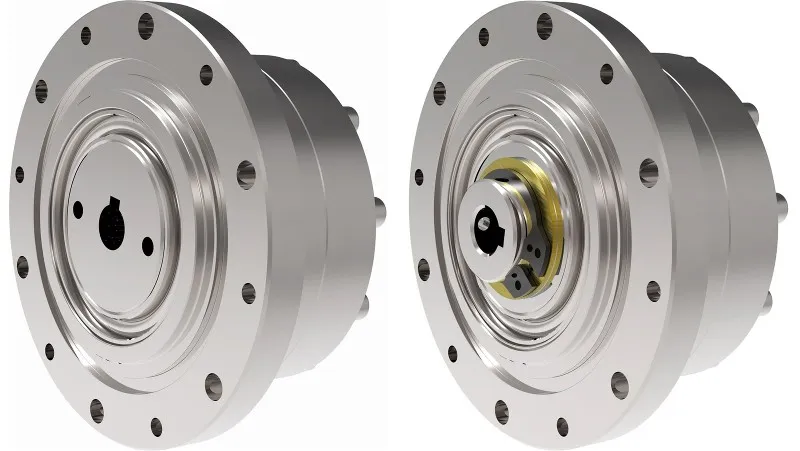
The GHC Series includes two structural configurations: a standard cup-type harmonic drive and a self-aligning type.Both versions adopt the classic cup-shaped flexspline structure, providing stable transmission performance and reliable positioning precision.
The self-aligning version incorporates a specially designed wave generator that allows slight angular compensation, helping maintain stable operation when minor assembly misalignments occur.
Key features:
- Proven cup-type harmonic transmission structure
- Optional self-aligning configuration for misalignment compensation
- Stable positioning accuracy and repeatability
- Balanced torque capacity, rigidity, and durability
The GHC Series is ideal for standard robotic systems, collaborative robots, and automation machinery requiring reliable, stable performance with flexible integration.
GHD Series: Dwarf Cup Type
The GHD Series features a short cup flexspline design optimized for installations where axial space is limited.
Its compact structure enables high-precision transmission while maintaining good rigidity in confined spaces.

Key features:
- Short cup structure with reduced axial dimension
- Compact and lightweight design
- High positioning accuracy and transmission stability
The GHD Series is suitable for semiconductor equipment, precision instruments, and compact robotic joints.
GHT Series: Cup type (Ultra-flat)
The GHT Series adopts an ultra-flat structural design optimized for applications with very limited axial installation space.
It provides high torque output within a compact profile, making it suitable for dynamic motion modules.

Key features:
- Short and flat structure for compact layouts
- High torque density suitable for dynamic motion
- Optimized for robotic end-effector integration
The GHT Series is widely used in robot wrist axes, rotary tables, and compact automation modules.
Conclusion
Harmonic drives combine high precision, compact structure and stable transmission performance. By understanding classification logic and applying proper selection principles, optimal system performance can be achieved.